
Rainwater Harvesting is the process of collecting and storing rainwater from rooftops or other surfaces for future use. It helps conserve water and reduces dependence on groundwater.
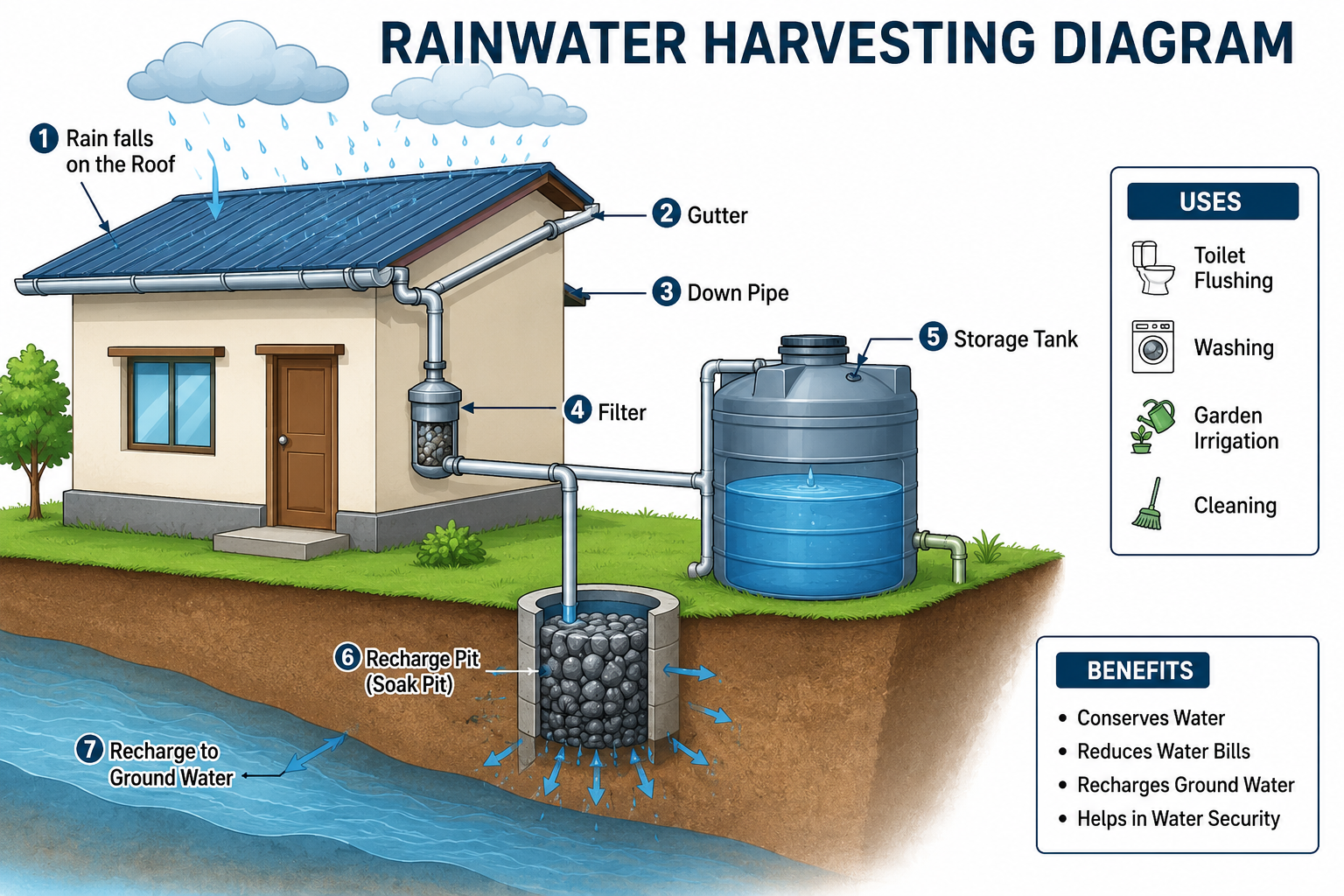
Diagram Explanation
Rainfall – Rain falls on the roof.
Gutters and Downpipe – Water is collected and directed through pipes.
Filter Unit – Removes leaves, dust, and other impurities.
Storage Tank – Clean water is stored for later use.
Recharge Pit/Well – Excess water is allowed to seep into the ground, increasing groundwater levels.
Advantages
Saves water for daily use.
Recharges groundwater.
Reduces water bills.
Prevents flooding and soil erosion.
Eco-friendly and sustainable.
Uses
Gardening
Washing vehicles
Toilet flushing
Cleaning
Drinking (after proper treatment).
Frequently Asked Questions (FAQ)
1. What is rainwater harvesting?
Rainwater harvesting is the process of collecting and storing rainwater from rooftops or other surfaces for future use.
2. Why is rainwater harvesting important?
It helps conserve water, recharge groundwater, reduce water bills, and provide an additional source of water during shortages.
3. What are the main components of a rainwater harvesting system?
A typical system includes a rooftop catchment, gutters, downpipes, a filter, a storage tank, and a recharge pit.
4. What are the uses of harvested rainwater?
Harvested rainwater can be used for gardening, washing vehicles, cleaning, toilet flushing, and, after proper treatment, drinking.
5. Can rainwater be used for drinking?
Yes, but only after proper filtration and purification to ensure it is safe for consumption.
6. How does rainwater harvesting help the environment?
It reduces water wastage, increases groundwater levels, prevents soil erosion, and supports sustainable water management.
7. Is rainwater harvesting suitable for homes?
Yes. Homes, schools, offices, and commercial buildings can all install rainwater harvesting systems.
8. What is the main benefit of rainwater harvesting?
The main benefit is conserving water while reducing dependence on groundwater and municipal water supplies.