
Environmental-DNA (eDNA)
Environmental DNA (eDNA) is one of the most exciting innovations in modern environmental science. Scientists can now detect the presence of plants, animals, fish, amphibians, insects, and even microorganisms without directly capturing or observing them. Instead, they analyze tiny traces of genetic material left behind in water, soil, air, or snow.
This revolutionary method has transformed biodiversity monitoring, wildlife conservation, and ecosystem management.Unlike traditional survey methods that often require extensive fieldwork, Environmental DNA provides a faster, non-invasive, and cost-effective approach. Governments, researchers, and conservation organizations worldwide are increasingly using Environmental DNA to monitor endangered species, detect invasive organisms, and assess ecosystem health.
In this article, we will explore the definition, working process, applications, advantages, limitations, and future potential of Environmental DNA.
What is Environmental-DNA?
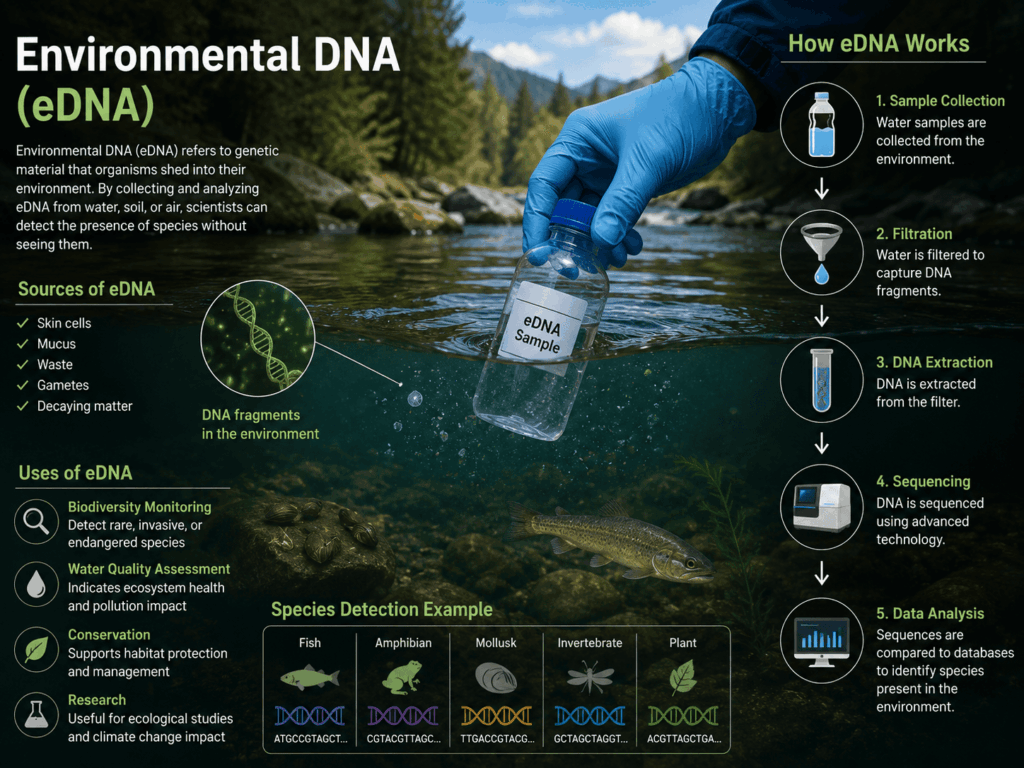
Environmental DNA (eDNA) refers to the genetic material released by living organisms into their surroundings. Animals and plants continuously shed DNA through skin cells, scales, feathers, hair, mucus, saliva, urine, feces, pollen, roots, and other biological materials.
Scientists collect environmental samples such as water, soil, or sediment and analyze them in laboratories to identify which species are present. Because Environmental DNA does not require capturing the organism itself, it has become one of the most efficient tools in biodiversity research.
How Does eDNA Work?
The Environmental DNA monitoring process generally follows these steps:1. Sample CollectionResearchers collect samples from rivers, lakes, oceans, forests, wetlands, or agricultural fields.
2. DNA ExtractionThe collected sample is filtered, and DNA fragments are extracted using laboratory techniques.
3. DNA AmplificationScientists use Polymerase Chain Reaction (PCR) to amplify tiny DNA fragments so they can be analyzed accurately.
4. DNA SequencingAdvanced sequencing technologies identify the species by comparing DNA sequences with international genetic databases
.5. Data InterpretationThe results reveal which organisms are present in the sampled environment.
Sources of Environmental DNA
different ecosystems contain DNA from many organisms.
Common sources include:
River
waterLake
waterOcean
waterSoil
Sediments
SnowIce
Air sample
Plant rootAnimal waste
These samples contain valuable genetic information that helps scientists monitor biodiversity.
Applications of Environmental-DNA
The use of Environmental-DNA has expanded rapidly across environmental science.
Biodiversity Monitoring
scientists use Environmental-DNA to identify species living in rivers, forests, wetlands, and oceans without disturbing wildlife.
Wildlife Conservation
Rare and endangered species are often difficult to observe directly. eDNA helps conservationists detect their presence and develop better protection strategies.
Detection of Invasive SpeciesEarly detection of invasive species allows governments to control them before they damage ecosystems.
Fisheries Management
Fish populations can be monitored more efficiently using eDNA instead of large-scale net surveys.
Water Quality AssessmentThe presence or absence of specific organisms can indicate the ecological condition of lakes and rivers.
Disease Monitoring
eDNA can also help detect disease-causing organisms and harmful pathogens in aquatic environments.
Advantages of e DNA
The popularity of e DNA is increasing because of its many benefits.
Non-invasive monitoring
High accuracy
Early detection of species
Saves time
Lower survey costs
Reduces disturbance to wildlife
Effective in remote areas
Detects rare and endangered species
Supports conservation planning
Improves biodiversity assessments
These advantages make Environmental -DNA one of the most valuable tools in modern ecology.
Limitations of Environmental DNA
Although Environmental-DNA offers many benefits, it also has certain limitations.
DNA degrades over time.
Environmental conditions affect DNA persistence
Laboratory contamination may produce false results.
It cannot always estimate population size accurately.
Specialized laboratory equipment is required.
Skilled researchers are needed for data analysis.
Therefore, scientists often combine eDNA with traditional field surveys for the most reliable results.
Future of Environmental-DNA
The future of Environmental-DNA looks extremely promising. Advances in DNA sequencing, artificial intelligence, and bioinformatics are making species identification faster and more accurate.
Scientists expect Environmental DNA to play a major role in:Climate change research Marine biodiversity Conservation forest ecosystem Monitoring agricultural Sustainability wetland Restoration pollution Assessment endangered species Conservation as technology continues to improve, Environmental-DNA is expected to become a standard tool in environmental monitoring programs across the globe.
Frequently Asked Questions (FAQs)
What is Environmental DNA (eDNA)?
Environmental DNA is genetic material released by organisms into their environment, allowing scientists to identify species without directly observing them.Where can Environmental DNA be collected?
It can be collected from water, soil, sediments, snow, ice, and even air samples.
Why is Environmental DNA important?
It helps monitor biodiversity, detect endangered species, identify invasive organisms, and support conservation efforts.
Is eDNA better than traditional surveys?
It is faster, less invasive, and more cost-effective, but both methods are often used together fr the best results.
What are the limitations of Environmental DNA?
DNA degradation, contamination risks, and the inability to accurately estimate population size are some limitations.
Conclusion
eDNA is revolutionizing environmental science by providing a fast, accurate, and non-invasive method for studying biodiversity. From monitoring endangered wildlife to detecting invasive species and assessing ecosystem health, Environmental DNA has become an essential tool for researchers and conservationists. Although it has certain limitations, continuous improvements in molecular biology and sequencing technologies are expanding its applications. As global biodiversity faces increasing threats, Environmental DNA will play a vital role in protecting ecosystems and supporting sustainable environmental management in the future.
For more visit us