
wetland
A wetland is an area of land where water covers the soil permanently or seasonally. Wetlands are transitional ecosystems between terrestrial (land) and aquatic (water) environments. They are among the most biologically productive ecosystems in the world.
Wetland Ecosystem
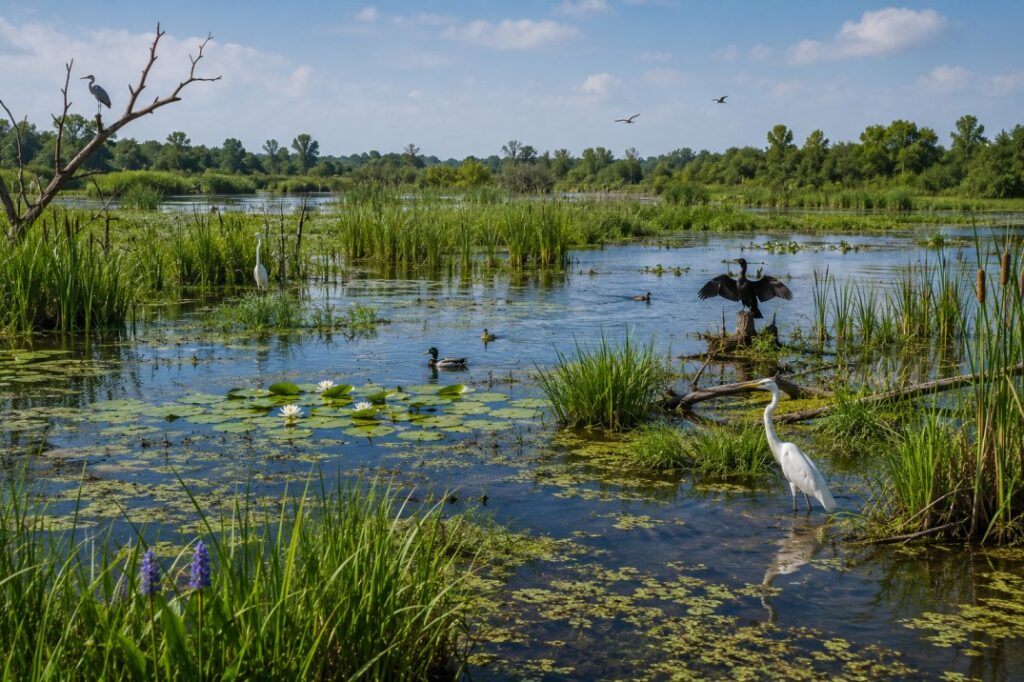
A wetland ecosystem is a unique ecosystem where land is covered by water either permanently or seasonally.
Wetlands support a rich variety of plants, animals, and microorganisms and are among the most productive ecosystems on Earth.
Definition
A wetland ecosystem is an area where water is the primary factor controlling the environment, soil, and the plants and animals that live there.
Types of Wetlands
Marshes – Dominated by grasses, reeds, and sedges.
Swamps – Characterized by trees and shrubs.
Bogs – Acidic wetlands with peat deposits.
Fens – Peat-forming wetlands fed by groundwater.
Mangroves – Coastal wetlands with salt-tolerant trees.
Floodplains – Areas flooded seasonally by rivers.
Characteristics of Wetlands
Presence of Water – Water is present permanently or seasonally, creating saturated conditions.
Hydric Soils – Wetlands contain waterlogged soils that are low in oxygen due to prolonged saturation.
Hydrophytic Vegetation – They support water-loving plants such as reeds, cattails, sedges, mangroves, and water lilies.
High Biodiversity – Wetlands provide habitat for fish, amphibians, reptiles, birds, mammals, insects, and countless microorganisms.
High Biological Productivity – They are among the most productive ecosystems because of abundant nutrients and sunlight.
Natural Water Filtration – Wetlands trap sediments, remove pollutants, and improve water quality.
Flood Control – They absorb excess rainwater and reduce the impact of floods.
Groundwater Recharge – Many wetlands help replenish underground water reserves.
Carbon Storage – Wetlands store large amounts of carbon in their soils and vegetation, helping mitigate climate change.
Dynamic Ecosystem – Water levels, vegetation, and wildlife change with seasons, rainfall, and climate.
Components of a Wetland Ecosystem
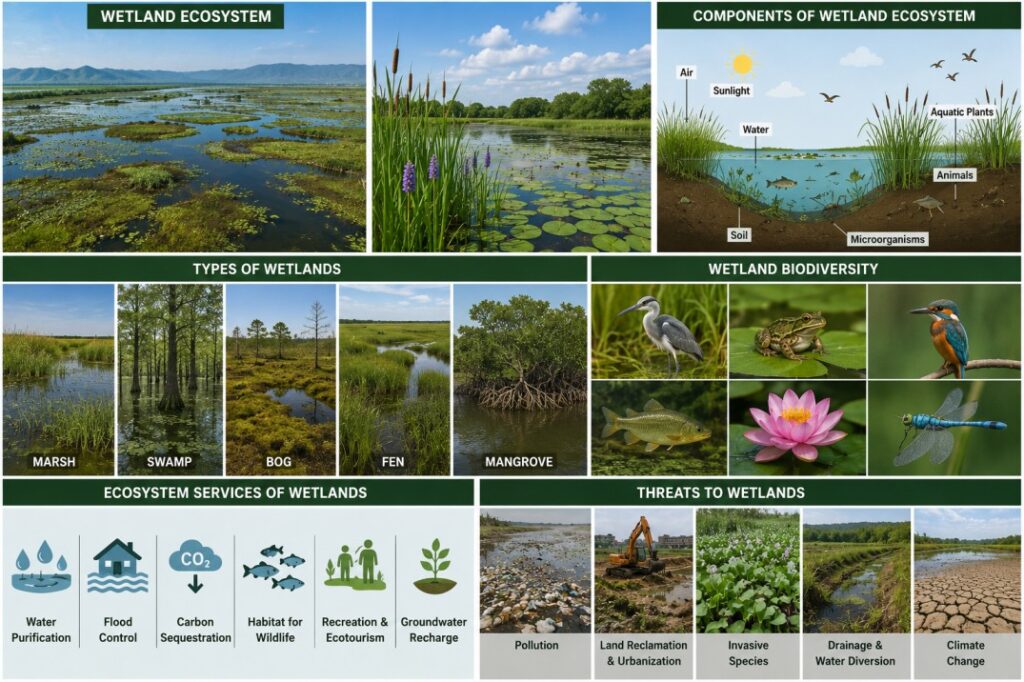
A wetland ecosystem consists of two main components: abiotic (non-living) and biotic (living) components.
Abiotic Components (Non-living)
These are the physical and chemical factors that influence the ecosystem.Water – Freshwater, brackish water, or saltwater; permanent or seasonal.
Soil (Hydric Soil) – Waterlogged, oxygen-poor soil rich in organic matter.Sunlight – Provides energy for photosynthesis.
Air – Supplies oxygen and carbon dioxide.Temperature – Affects plant and animal growth.
Nutrients – Nitrogen, phosphorus, potassium, and other minerals essential for life.
pH and Salinity – Influence the distribution of wetland organisms.
Biotic Components (Living)
These include all living organisms in the wetland ecosystem
Producers
Plants and algae that make food through photosynthesis.ReedsCattailsSedgesMangrovesWater liliesPhytoplankton and algaeb)
Consumers
Animals that feed on plants or other animals.
Primary consumers: Snails, insects, zooplankton, ducks.
Secondary consumers: Frogs, fish, turtles.Tertiary consumers: Herons, crocodiles, otters, eagles.
Decomposers
Organisms that break down dead plants and animals, recycling nutrients.
Bacteria
Fung
iEarthworms
Aquatic microorganisms
Wetland Biodiversity
Wetland biodiversity refers to the variety of living organisms—including plants, animals, fungi, and microorganisms—that inhabit wetland ecosystems. Wetlands are among the most biologically diverse ecosystems on Earth because they provide food, water, shelter, and breeding grounds for numerous species.
Components of Wetland Biodiversity
Flora: (plant Diversity)
Wetlands support a wide range of aquatic and semi-aquatic plants, such as:Reeds Cattails Sedges Water lilies Lotus Mangroves Algae Duckweed.
Fauna (Animal Diversity)
Wetlands provide habitat for many animal groups, including;
Fishes, amphibians, reptiles, Bird’s , invertebrates etc.
Micro organisms
Bacteria,fungi ,Phytoplankton ,Zooplankton.
Wetland Ecosystem Services
Wetland ecosystem services are the benefits that wetlands provide to humans and the environment. These services help maintain ecological balance, improve water quality, support biodiversity, and contribute to human well-being.
Types of Wetland Ecosystem Services
Provisioning Services
These are products obtained directly from wetlands.
Freshwater supply
Fish and shellfish
Timber and fuelwood
Medicinal plants
Fodder for livestock
Raw
materials such as reeds and Bamboo.
Regulating Services
These services regulate natural processes.
Flood control by storing excess rainwater
Water purification through natural filtration
Groundwater recharge
Carbon sequestration and climate regulation
Shoreline stabilization and erosion control
Storm and cyclone protection in coastal areas
Supporting Services
These services sustain ecosystem functioning.
Nutrient cycling
Soil formation
Primary production
Habitat for wildlife
Breeding and nursery grounds for fish and birds
Maintenance of biodiversity.
Cultural Services
These provide social and cultural benefits.
Ecotourism
Recreation and birdwatching
Environmental education
Scientific research
Spiritual and cultural values
Aesthetic beauty.
Threats to Wetland ecosystem
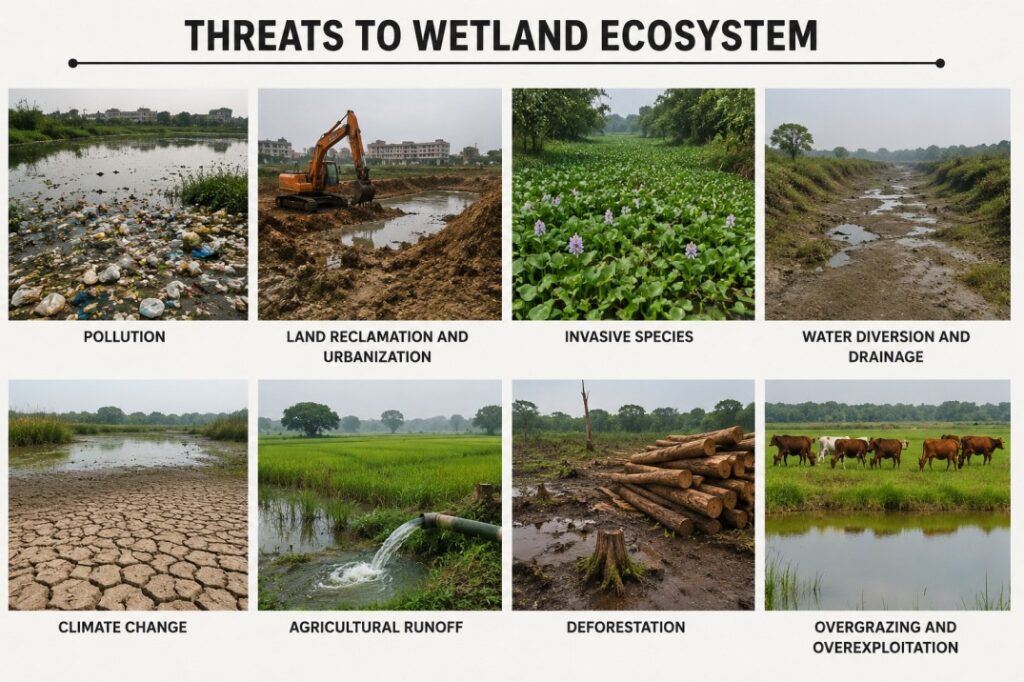
Threats to wetlands are natural and human-induced factors that damage wetland ecosystems, reduce biodiversity, and decrease the valuable ecosystem services they provide.
Major Threats to Wetland ecosystem
Pollution – industrial waste ,agricultural fertilizers, pesticides, sewage,
Urbanization and Land Reclamation: Often drained and converted into residential, industrial, or agricultural land, leading to habitat loss.
Invasive Species: Non-native plants and animals compete with native species, disrupt food chains, and reduce biodiversity.
Overexploitation of Resources: Overfishing, excessive grazing, uncontrolled harvesting of plants, and illegal hunting degrade wetland ecosystems.
Mining and Industrial Activities: Mining and industrial development pollute water and alter natural landscapes, severely affecting wetlands.
Agricultural Expansion:Conversion of wetlands into farmland destroys habitats and increases pollution from fertilizers and pesticides.
Conservation of Wetland Ecosystem
Wetland ecosystem conservation is the protection, restoration, and sustainable management of wetlands to preserve their biodiversity, ecosystem services, and ecological functions for present and future generations.
Methods of Wetland Conservation
1. Protect Existing WetlandsPrevent the destruction, drainage, and conversion of natural wetlands.
2. Restore Degraded WetlandsRehabilitate damaged wetlands by restoring natural water flow, vegetation, and wildlife habitats.
3. Control PollutionReduce industrial waste, sewage, plastic pollution, and agricultural runoff entering wetlands.
4. Sustainable Land UseEncourage eco-friendly farming, responsible fishing, and controlled grazing near wetlands.
5. Control Invasive SpeciesRemove invasive plants and animals that threaten native biodiversity.
6. Afforestation and Vegetation RestorationPlant native trees, grasses, and aquatic vegetation to stabilize soil and improve habitat quality.
7. Strengthen Laws and PoliciesImplement and enforce environmental laws to protect wetlands from illegal encroachment and exploitation.
8. Community ParticipationInvolve local communities, NGOs, and volunteers in wetland protection and awareness programs.
9. Research and MonitoringRegularly monitor water quality, biodiversity, and ecosystem health to guide conservation efforts.
10. Environmental EducationPromote awareness through schools, universities, media, and conservation campaigns.
Ramsar Convention on Wetlands
The Ramsar Convention on Wetlands is the world’s leading international treaty dedicated to wetland conservation.
Adopted: 2 February 1971
Location: Ramsar Entered into force: 21 December 1975
Objective: To promote the conservation and wise use of wetlands through national actions and international cooperation.
Objectives of the Ramsar Convention
Conserve wetlands of international importance.
Promote the wise use of all wetlands.
Protect wetland biodiversity.
Support sustainable development.
Encourage international cooperation on shared wetlands, rivers, and migratory species.
Restore degraded wetland ecosystems.
Ramsar Sites
Ramsar Sites are wetlands recognized as being of international importance because of their ecological, botanical, zoological, limnological, or hydrological value.
importance of Ramsar Sites
Protect habitats for migratory birds.
Conserve endangered species.
Maintain water quality.
Reduce flood risks.
Support local communities and livelihoods.
Promote scientific research and ecotourism.
Other International Initiatives
Convention on Biological Diversity (CBD)
United Nations Environment Programme
International Union for Conservation of Nature
UNESCO
Interesting Facts About Wetlands
Wetlands are among the most productive ecosystems on Earth, comparable to tropical rainforests and coral reefs
.Only about 6% of the Earth’s land surface is covered by wetlands, yet they support an extraordinary diversity of life.
Wetlands provide habitat for thousands of species of plants, fish, amphibians, reptiles, birds, mammals, and insects.
Many migratory birds depend on wetlands for breeding, feeding, and resting during their long journeys.
Wetlands act as natural water filters, removing sediments, nutrients, and pollutants from water.
They help reduce flooding by absorbing and storing excess rainwater like natural sponges.
Wetlands recharge groundwater, helping maintain freshwater supplies.
Mangrove wetlands protect coastlines from storms, cyclones, and erosion.
Wetlands store large amounts of carbon, helping reduce greenhouse gases and combat climate change.
They support important economic activities such as fisheries, agriculture, ecotourism, and recreation.
Wetlands provide breeding and nursery grounds for many commercially important fish species.The Ramsar Convention, signed in 1971, is the world’s first international treaty dedicated to wetland conservation.
2 February is celebrated every year as World Wetlands Day to raise awareness about the importance of wetlands.
Wetlands occur in freshwater, brackish, and saltwater environments across every continent except Antarctica.
Despite their importance, many wetlands have been lost or degraded due to pollution, urbanization, drainage, and climate change, making conservation essential.
Frequently Asked Questions (FAQs) About Wetland Ecosystems.
What is a wetland ecosystem?
A wetland ecosystem is an area where water covers the soil permanently or seasonally, supporting water-loving plants, diverse wildlife, and unique ecological processes.
2. What are the main types of wetlands?
The major types of wetlands are:Marshes Swamp Bogs Fens Mangrove wetlands
3. Why are wetlands important?
Wetlands provide many benefits, including:Flood Control water Purification groundwater Recharge carbon Sequestration biodiversity Conservation habitat for fish and migratory birds
4. What are the main components of a wetland ecosystem?
A wetland ecosystem has two main components:Abiotic components: Water, soil, sunlight, air, nutrients, temperatureBiotic components: Plants, animals, microorganisms, and decomposers
5. Which plants are commonly found in wetlands?Common wetland plants include reeds, cattails, sedges, mangroves, lotus, water lilies, algae, and duckweed.
6. Which animals live in wetlands?
Wetlands are home to fish, frogs, turtles, crocodiles, ducks, herons, kingfishers, otters, insects, and many other species.
7. What are the major threats to wetlands?
The main threats include pollution, urbanization, land reclamation, climate change, invasive species, agricultural runoff, and excessive water extraction.
8. How do wetlands help control floods?
Wetlands act like natural sponges by absorbing and storing excess rainwater, reducing flood intensity and protecting nearby communities.
9. What is the Ramsar Convention?
The Ramsar Convention is an international treaty adopted in 1971 to promote the conservation and wise use of wetlands worldwide.
10. How can wetlands be conserved?
Wetlands can be conserved by preventing pollution, restoring degraded wetlands, protecting natural habitats, controlling invasive species, promoting sustainable land use, and increasing public awareness.
For mor visit us