
introduction
Biochar and Carbon Sequestration .
Climate change is one of the greatest environmental challenges of the 21st century. Scientists are developing innovative methods to reduce atmospheric carbon dioxide (CO₂), and one of the most promising solutions is biochar. Biochar not only improves soil fertility but also helps store carbon in the soil for hundreds of years, making it an effective tool for carbon sequestration.
What is Biochar?
Biochar is a carbon-rich material produced by heating organic biomass, such as crop residues, wood chips, or agricultural waste, in a low-oxygen environment through a process called pyrolysis.Unlike ordinary charcoal used as fuel, biochar is mainly used to improve soil quality and capture carbon.
Definition
Biochar is a stable, carbon-rich porous material produced by heating organic biomass (such as wood, crop residues, or agricultural waste) in a low-oxygen environment through a process called pyrolysis. It is mainly used to improve soil fertility, increase water retention, enhance crop productivity, and store carbon in the soil, helping reduce climate change.
In simple language Biochar is a charcoal-like material made from organic waste by heating it without enough oxygen, used to improve soil health and capture carbon.
What is Carbon Sequestration?
Biochar is a stable, carbon-rich material produced by heating organic biomass (such as crop residues, wood chips, or agricultural waste) in a low-oxygen environment through a process called pyrolysis.Carbon sequestration is the process of capturing and storing atmospheric carbon dioxide (CO₂) for a long period to reduce greenhouse gas emissions and slow climate change.
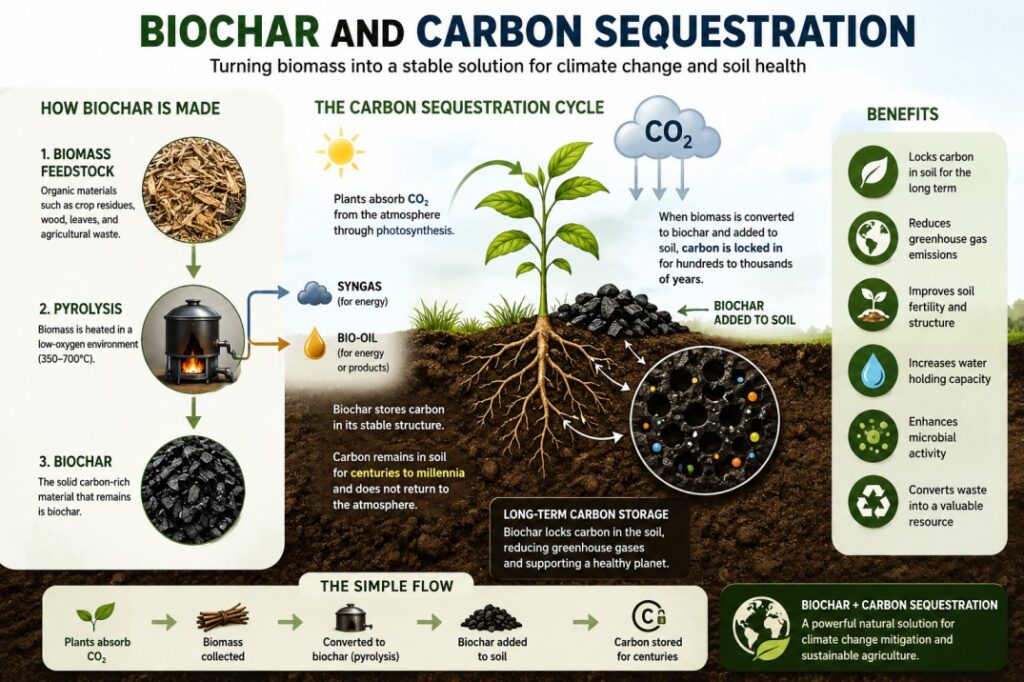
How is Biochar Made?
Biomass is collected.Biomass is dried.It is heated at 350–700°C in the absence of oxygen (pyrolysis).Biochar is produced.Biochar is mixed with soil.
How Does Biochar Store Carbon?
Normally, plant waste decomposes and releases CO₂ back into the atmosphere. During pyrolysis, much of the carbon becomes stable and remains locked inside the biochar instead of returning to the atmosphere. When biochar is added to soil, this carbon can remain stored for decades to centuries.
Benefits of Biochar
Improves soil fertility
Increases water-holding capacity
Reduces greenhouse gas emissions
Enhances crop productivity
Supports beneficial soil microorganisms
Reduces fertilizer requirements
Stores carbon for a long time
Applications
Sustainable agriculture
Climate change mitigation
Soil restoration
Waste management
ForestryOrganic farming
Advantages
Renewable technology.
Eco-friendly.
Improves soil health.
Reduces carbon emissions.
Converts agricultural waste into useful products.
Limitations.
Initial production cost.
Requires pyrolysis equipment.
Effectiveness depends on feedstock and soil type.
Lack of awareness in many regions.
Future Scope
Biochar is expected to play a major role in:
Carbon credit projects
Climate-smart agriculture
Sustainable farming
Land restoration
Global carbon reduction strategies
Conclusion
Biochar is a sustainable solution that improves soil quality while helping reduce atmospheric carbon dioxide through long-term carbon storage. As countries work toward climate goals, biochar is becoming an important technology for agriculture and environmental conservation.
FAQs
Q1. What is biochar?
Biochar is a carbon-rich material produced by heating biomass in low oxygen.
Q2. What is carbon sequestration?
It is the process of capturing and storing carbon dioxide to reduce climate change.
Q3. How does biochar help reduce climate change?
It stores carbon in the soil for long periods, preventing it from returning to the atmosphere.
Q4. What are the main uses of biochar?
Soil improvement, sustainable agriculture, carbon storage, and waste management.
Q5. Is biochar environmentally friendly?
Yes. When produced and used responsibly, biochar can improve soil health and help reduce greenhouse gas emissions.
For more details please visit us