
Microplastics in Drinking Water:
(Health Risks, Sources, Prevention & Future Research )
Clean drinking water is essential for a healthy life. However, scientists have discovered that tiny plastic particles called microplastics are now present in rivers, lakes, groundwater, bottled water, and even tap water. These particles are so small that they are often invisible to the naked eye. As plastic pollution continues to increase worldwide, concerns about the impact of microplastics on human health are also growing.Understanding where these particles come from, how they enter drinking water, and what we can do to reduce exposure is becoming an important public health issue.
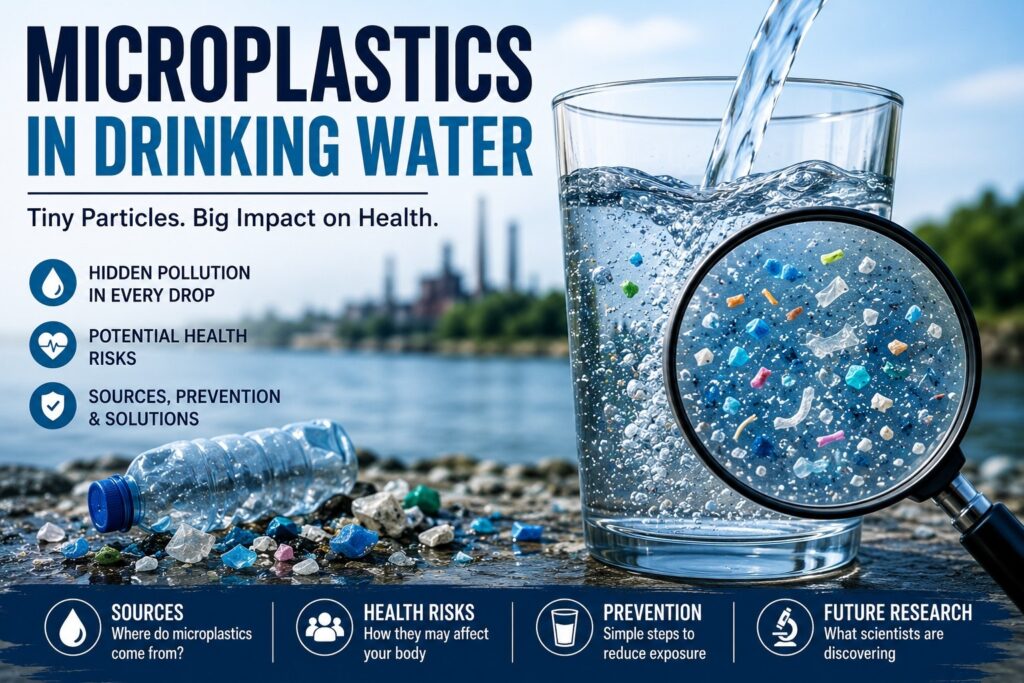
What Are Microplastics?
Microplastics are tiny plastic particles that are less than 5 millimeters in size. They are formed when larger plastic items such as bottles, bags, packaging materials, and fishing nets break down into smaller pieces due to sunlight, heat, and weathering.Microplastics are generally divided into two types:
Primary microplastics: Manufactured in small sizes for products such as cosmetics, industrial cleaners, and plastic pellets.
Secondary microplastics Created when larger plastic waste gradually breaks into tiny fragments in the environment.Because plastic takes hundreds of years to decompose, these particles remain in nature for a very long time.
How Do Microplastics in Drinking Water enters?
Microplastics in Drinking water
Microplastics can reach drinking water through several pathways. Plastic waste thrown into rivers and lakes slowly breaks down into smaller particles. Rainwater washes plastic debris into water bodies, while wastewater treatment plants cannot remove every tiny plastic particle.Common sources include:Plastic bottles and food Packaging synthetic clothing fibers released during Washing tiers wear from Vehicle industrial plastic Waste household Wastewater degraded plastic pipes and storage Containers as a result, microplastics have been detected in both bottled water and municipal tap water in many parts of the world.Potential Health Risk scientists are still studying the long-term effects of microplastics on human health. Although research is ongoing, several potential risks have been identified.
Effects of Microplastics in drinking water
1. Digestive System Effects: Microplastics may enter the digestive tract through drinking water and food. Researchers are investigating whether continuous exposure could affect the normal functioning of the digestive system.
2. Chemical ExposurePlastic particles may contain harmful chemicals or absorb pollutants from the environment. These substances may enter the human body along with the plastic particles.
3. InflammationSome laboratory studies suggest that tiny plastic particles may trigger inflammation in body tissues, although more research is needed to understand their effects in humans.
4. Hormonal DisruptionCertain plastics contain chemicals that may interfere with the body’s hormonal system. Long-term exposure is being studied for its possible impact on health.
5. Unknown Long-Term Effects Because microplastic research is relatively new, scientists are continuing to investigate how lifelong exposure may affect organs such as the liver, kidneys, lungs, and immune system.
Who Is More Vulnerable?
While everyone may be exposed to microplastics, some groups require extra protection:Infants and young childrenPregnant womenElderly peopleIndividuals with weakened immune systemsPeople living in heavily polluted urban areasReducing unnecessary exposure is especially important for these groups.
How Can You Reduce Exposure to microplastics in drinking water ?
Although it is impossible to eliminate microplastics in drinking water completely, several simple lifestyle changes can help reduce exposure.Drink filtered water whenever possible.Reduce the use of single-use plastic bottles.Store food in glass or stainless-steel containers.Avoid heating food in plastic containers.Use reusable water bottles made of steel or glass.Reduce plastic waste by recycling properly.Choose natural fiber clothing such as cotton instead of synthetic fabrics whenever possible.These small steps can contribute to both personal health and environmental protection.
Global Efforts to Reduce Plastic Pollution
Governments and environmental organizations around the world are working to reduce plastic pollution and microplastics in drinking water. Many countries have introduced restrictions on single-use plastics, improved recycling systems, and encouraged sustainable alternatives.Scientists are also developing advanced water treatment technologies capable of removing extremely small plastic particles from drinking water. Continued research and innovation are expected to improve water safety in the future.
Future Research
Although scientists have confirmed the presence of microplastics in drinking water, many important questions remain unanswered.
Future research aims to understand:
How much microplastic exposure is considered safe.The long-term effects on human health.Better technologies for removing microplastics from water.Environmentally friendly alternatives to conventional plastics.Improved recycling methods to reduce plastic pollution.As scientific knowledge grows, public health recommendations will become more accurate and effective.ConclusionMicroplastics in drinking water have become a global environmental and public health concern. While current research continues to explore their long-term health effects, reducing plastic pollution and limiting personal exposure are practical steps everyone can take. Choosing reusable products, reducing plastic waste, and supporting clean water initiatives can help protect both human health and the environment. Greater awareness and scientific research will play a key role in creating a cleaner and healthier future.—
Safety Tips to Reduce Microplastics in Drinking Water
Use a high-quality water filter such as Reverse Osmosis (RO) or an ultrafiltration system.Avoid drinking water from single-use plastic bottles whenever possible.Store drinking water in glass or stainless steel containers instead of plastic.Replace old or damaged plastic water bottles and containers regularly.Do not expose plastic bottles to direct sunlight or high temperatures, as heat can increase plastic particle release.Reduce the use of disposable plastic products to help lower environmental plastic pollution.Drink water from trusted and tested sources whenever available.Follow local water quality advisories and maintain home filtration systems according to the manufacturer’s instructions.These tips can help reduce your exposure to microplastics in drinking water, although no method can guarantee complete elimination.
FAQs
Q1. What are microplastics?
Microplastics are plastic particles smaller than 5 mm that come from the breakdown of larger plastic items or are manufactured in tiny sizes.
Q2. Can microplastics be found in tap water?
Yes. Studies have detected microplastics in both tap water and bottled drinking water in many countries.
Q3. Are microplastics harmful to human health?
Scientists are still researching their long-term effects, but there are concerns about inflammation, chemical exposure, and hormonal disruption.
Q4. How can I reduce microplastic exposure?Use filtered water, avoid single-use plastics, store food in glass containers, and reduce plastic waste.
Q5. Why is reducing plastic pollution important?
Reducing plastic pollution helps protect drinking water, wildlife, ecosystems, and public health for future generations.
Can boiling water remove microplastics?
Boiling may reduce some microplastics under certain conditions, but it does not completely remove them. Proper filtration is generally more effective.
Which water filter is best for removing microplastics?
Reverse Osmosis (RO), nanofiltration, and high-quality ultrafiltration systems are among the most effective options for reducing microplastics.